
The Court Confirmation Process in California Probate Sales: What Executors and Buyers Need to Know
Of all the components of a California probate real estate sale, the court confirmation process is the one most likely to surprise both executors and buyers — and the one most likely to cause delays when it is not understood from the outset. It adds steps, extends timelines, and introduces procedural requirements that have no parallel in a standard residential transaction. For anyone involved in a probate sale that requires court confirmation, a clear understanding of how the process works is not optional — it is essential to managing expectations and avoiding costly mistakes.
Before reading further, it helps to know where you stand. Are you the executor or administrator responsible for selling the property? A beneficiary with an interest in the outcome? Or a prospective buyer trying to understand what you are stepping into? The confirmation process affects each of these roles differently, and this guide speaks to all of them.
What Court Confirmation Is
Court confirmation is a legal proceeding in which a California probate court reviews and approves the sale of real property from an estate. It exists to protect the interests of heirs and creditors by ensuring that the property is sold at or above fair market value, that the process was conducted properly, and that no party is disadvantaged by the transaction.
Not every probate sale requires court confirmation. As discussed in our overview of how California probate real estate works, executors with full authority under the Independent Administration of Estates Act can sell property without returning to court, provided proper notice procedures are followed and no heir objects. But when IAEA authority is absent or limited — which is more common than many executors expect — court confirmation is required.
The 90% Rule: Minimum Accepted Offer Price
The starting point for a court confirmation sale is the probate referee’s appraisal of the property at fair market value. California law establishes that any offer accepted by the executor in a court confirmation sale must be at least 90% of that appraised value.
This means that if a property is appraised at $1,200,000, the minimum acceptable offer is $1,080,000. The executor cannot accept an offer below this threshold, regardless of market conditions or other circumstances. If no buyer comes forward at or above the minimum, the property remains unsold and the executor must reappraise or seek further court guidance.
In practice, the 90% floor protects the estate from undervalued sales but also establishes a pricing framework that experienced probate buyers understand and work within.
The Notice of Proposed Action and Waiting Period
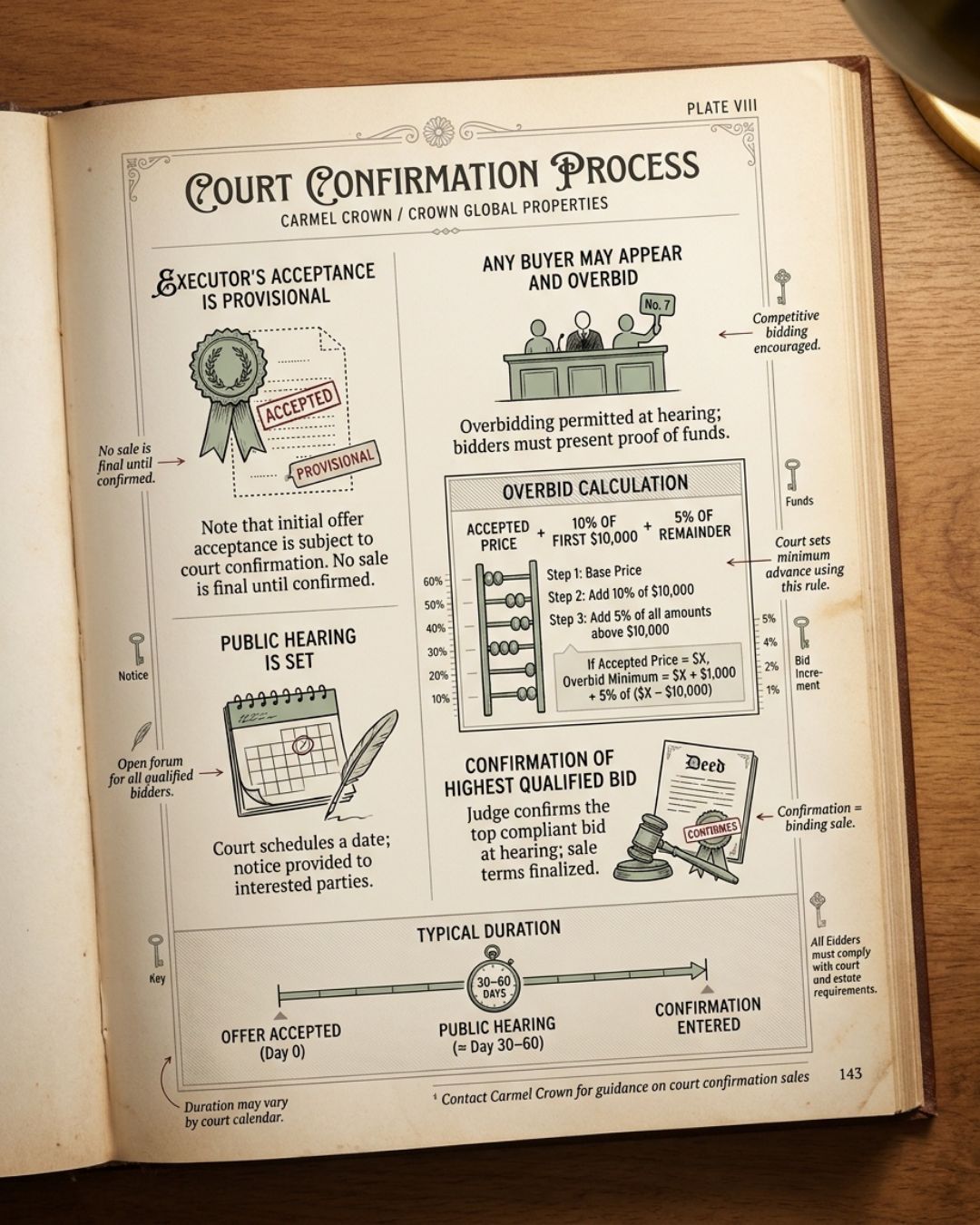
Once the executor accepts an offer, a Notice of Proposed Action must be sent to all heirs and interested parties, giving them a minimum of 15 days to object to the sale. If no objections are filed within that period, the sale can proceed to the court hearing.
This waiting period — often overlooked in early timeline planning — is one of the structural reasons probate sales take longer than standard transactions. It cannot be waived or shortened, and any heir who files a timely objection can delay or complicate the process further.
The Court Hearing and Overbidding
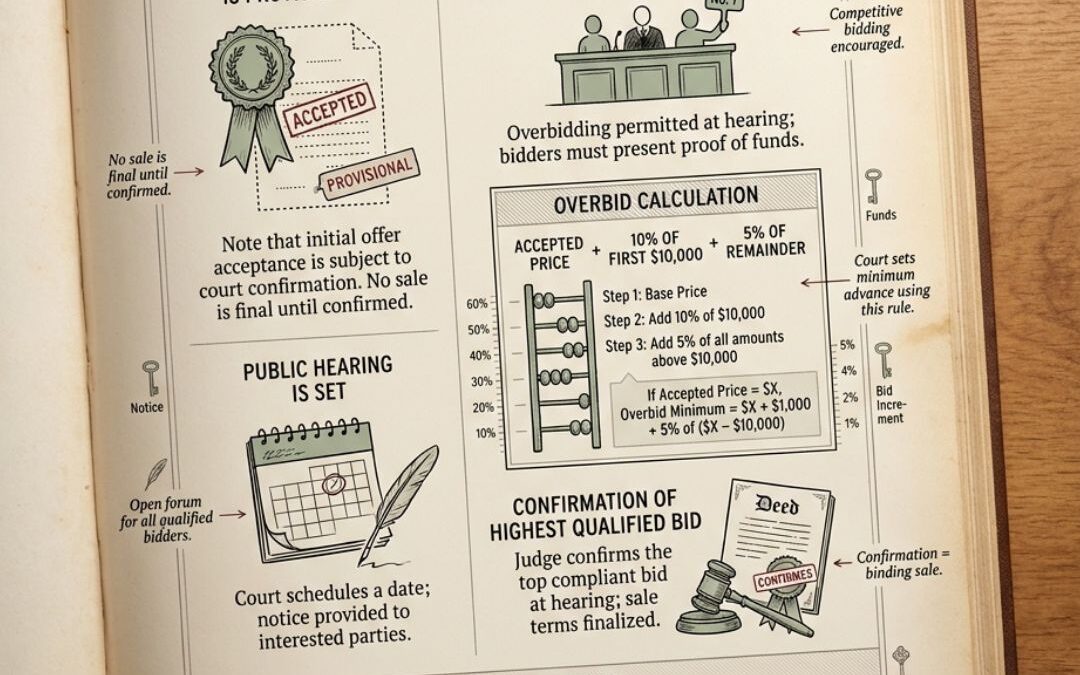
At the court confirmation hearing, the judge reviews the proposed sale and — importantly — opens the process to overbidding from any buyer who appears in court that day. This is one of the most distinctive and frequently misunderstood aspects of California probate sales.
Any person who meets the minimum overbid requirements can appear at the hearing and submit a competing offer. The minimum overbid is calculated as the accepted offer price plus 10% of the first $10,000, plus 5% of the remainder. For a $1,200,000 accepted offer, the minimum overbid would be approximately $1,261,000.
If an overbidder appears, bidding proceeds in court in increments set by the judge until no further bids are entered. The highest bidder is confirmed as the buyer, regardless of who submitted the original accepted offer. The original buyer’s deposit is returned if they are outbid.
This dynamic has several practical implications. Original buyers should be prepared for the possibility of being overbid and should not commit to non-refundable costs (such as inspections or appraisals) before confirmation. Buyers who want the property may consider attending the hearing themselves to defend their offer or bid higher. And executors should understand that the confirmed price may be higher — or that a different buyer may emerge — than what the accepted offer suggested.
Timelines and What to Expect
From accepted offer to court confirmation, the process typically takes 30 to 60 days, depending on court scheduling in the relevant county. County probate calendars have their own scheduling rhythms, and cases are set based on availability — not urgency.
The overall timeline for a court confirmation sale — from listing to close — is generally 90 to 120 days at minimum, and often longer when combined with the broader probate case timeline. Buyers and executors should plan accordingly and resist the temptation to set closing expectations that the process cannot meet.
What Buyers Should Know Before Making an Offer
Buying a property through court confirmation requires patience, flexibility, and an understanding that the transaction is not final until the court confirms it. Savvy probate buyers — often experienced investors or buyers specifically seeking the value opportunities probate can present — approach these transactions with realistic timelines, contingency plans for the overbid scenario, and a willingness to work within the court’s schedule rather than against it.
Due diligence should be conducted before the hearing if possible, since confirmed buyers are typically expected to close within 30 days of confirmation. Waiting until after court confirmation to order inspections compresses the closing timeline in ways that can create pressure and complications.
The Executor’s Responsibility
For executors, the court confirmation process requires careful coordination with your probate attorney, your real estate broker, and the court. Documentation must be precise, deadlines must be observed, and communication with heirs must be proactive to avoid objections that could have been addressed earlier.
It is also worth remembering that not every attorney who advertises probate experience has handled many confirmation sales specifically. This is a niche within a niche, and it rewards counsel and a real estate broker who work in it regularly. If it would help, Crown Global Properties has worked alongside experienced probate and trust attorneys and is glad to share those relationships — directly, or alongside the counsel you already have.
If you are managing a probate sale anywhere in California and want to understand whether your estate requires court confirmation — and what that process will look like in practice — we welcome a direct conversation. Clarity at the beginning of the process saves significant time and frustration later.
Have you been through a court confirmation sale as a buyer or executor? We would be glad to hear your experience in the comments.