
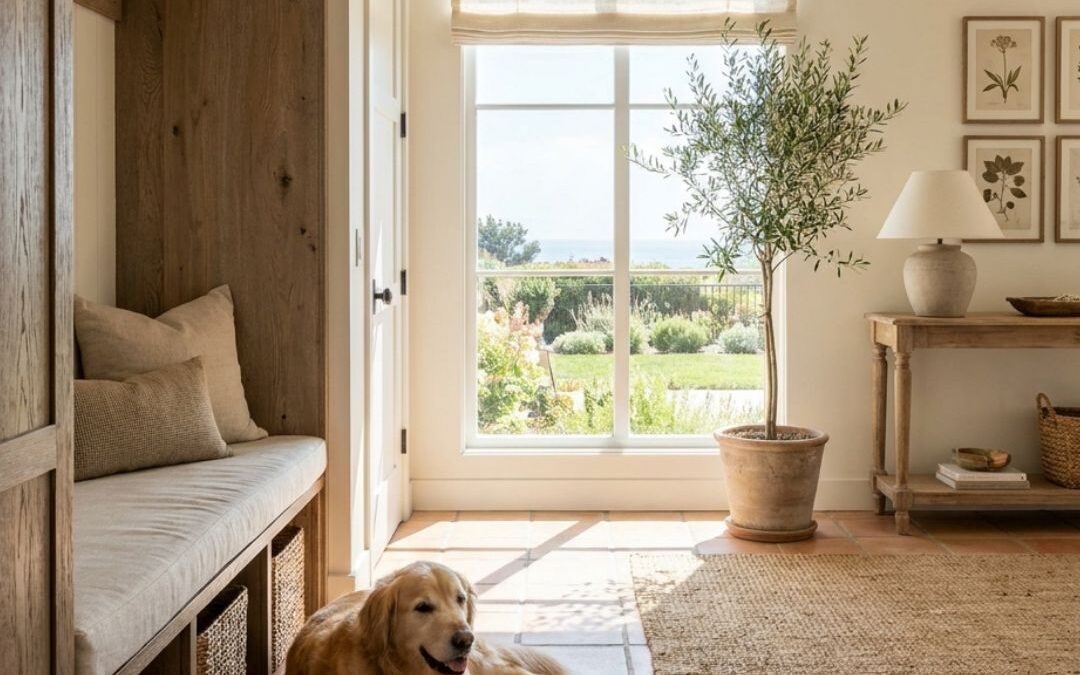
Buyers relocating to the Monterey Peninsula with pets often begin with the right instinct: they look for a dog-friendly town. Carmel-by-the-Sea and the surrounding communities certainly qualify. But the community is only half the picture. The home itself — its layout, its outdoor space, and its position relative to trails and beaches — determines how comfortably daily life with animals actually works. Below are the considerations worth weighing before you make an offer.
Outdoor space and enclosure
A fenced yard is among the most requested features for buyers with dogs, and on the Peninsula it deserves closer inspection than it might elsewhere. Many Carmel and Pebble Beach properties sit on wooded or sloped lots where full enclosure is either absent or restricted by design guidelines meant to preserve the area’s forested character. Before assuming a yard can be fenced, it is worth understanding local rules and any homeowners association or forest-management requirements. For some buyers, a modest but securely enclosed yard outweighs a larger open one.
Interior materials that age well with animals
Coastal living and pets place particular demands on a home’s interior. Durable, moisture-tolerant flooring — engineered wood, tile, or quality luxury vinyl — holds up far better to sandy paws and damp coats than delicate hardwood or light carpet. A practical entry or mudroom, ideally with a place to rinse off after a beach walk, is a meaningful convenience in a climate defined by fog and sea air. These are not luxuries so much as features that preserve a home’s condition over years of active use.
Proximity to open space
Where a home sits relative to the Peninsula’s outdoor amenities shapes the texture of daily life. Access to Carmel Beach, Mission Trail Nature Preserve, or Garland Ranch Regional Park in Carmel Valley means a walk is never far. Buyers should note that these spaces have different rules — Carmel Beach permits off-leash access under voice control, while many parks and state beaches require leashes — and that a short drive versus a short walk can meaningfully change a routine. For active households, proximity to trails is often as valuable as proximity to town.
Coastal realities to plan for
The same natural setting that makes the Peninsula extraordinary also carries considerations for pet owners. Seasonal foxtails and certain native plants can pose hazards on trails; wildlife, including deer and coyotes, is present throughout the residential areas of Carmel, Pebble Beach, and Carmel Valley; and the region’s persistent fog and cool evenings matter for short-haired breeds. None of these are reasons for concern so much as details to build into a decision about where and how to live.
Rules that follow the property
Pet policies are not uniform across the Peninsula. Certain condominium developments, gated communities, and homeowners associations impose restrictions on the number, size, or type of animals permitted. Buyers considering a property with an association should review its governing documents carefully. The same applies to anyone contemplating an income or vacation-rental strategy, where pet policies affect both tenant demand and insurance considerations. These are the kinds of details that are far easier to address before closing than after.
Access to care
Finally, it is worth mapping the practical infrastructure of pet ownership in the area — veterinary practices, emergency clinics, groomers, and boarding — particularly for buyers relocating from a major metropolitan area with different expectations of availability. The Monterey Peninsula is well served, but travel times between communities are a factor worth understanding in advance.
The through line
The most satisfied buyers are those who define what their household actually needs before they fall for a particular home. A property that suits an active dog and its owners is a specific thing, and the right one is easier to recognize when the criteria are clear. At Crown Global Properties, we help buyers weigh these considerations alongside the fundamentals of location, value, and long-term suitability — so the home you choose fits the life you intend to live in it.